Close Up of Honeybee
A Designer’s First Impression: Charm with Quiet Confidence
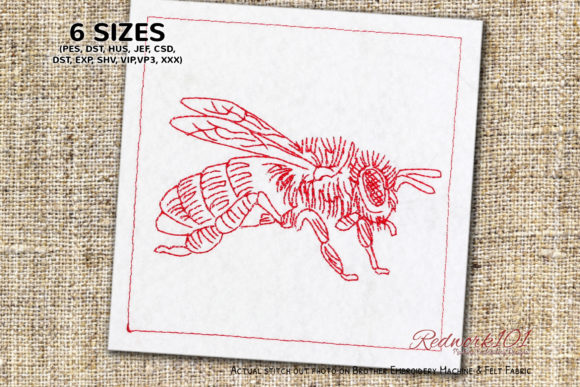
When I opened Close Up of Honeybee for the first time, I didn’t see just another bug motif—I saw a design that breathes. Its composition balances scientific accuracy with gentle whimsy: wings with subtle veining, antennae that curve like calligraphy strokes, and a body layered in soft tonal gradients—not cartoonish, not clinical, but *alive*. It lands somewhere between nature journal and heirloom textile, which makes it unusually versatile. As a designer who regularly selects embroidery files for client projects and small-batch merchandise, I immediately pictured it on a linen tea towel for a local apothecary shop—clean, intentional, quietly memorable.
Where It Shines: Real Projects, Real Customers
I tested Close Up of Honeybee on a natural cotton tote bag destined for a spring farmers’ market pop-up. Stitched with matte cotton thread and medium-weight tear-away stabilizer, the design held its shape beautifully—even across the slight curve of the bag’s side seam. The wings read clearly without shimmering or bleeding; the thorax retained texture without overcrowding. That’s rare in bee designs, where fine wing details often collapse into muddy fill stitch or vanish entirely.
It also translated well to a lightweight organic cotton baby onesie—stitched at 75% scale using a lightweight cutaway stabilizer. Parents responded strongly to the warmth and gentleness of the image. No sharp edges, no aggressive contrast—just a friendly, grounded presence. For Etsy sellers or boutique owners, that emotional resonance matters more than perfect symmetry. A customer isn’t buying “a bee.” They’re buying softness, care, connection to nature—and Close Up of Honeybee delivers that without leaning into cliché.
On sweatshirts? Yes—but with nuance. The design’s moderate density (no heavy satin borders or dense underlay) kept it flexible and breathable. It didn’t stiffen the fabric or pull at the knit. I’d avoid placing it directly over shoulder seams or elbow bends unless testing first, but centered on the chest or upper back? Strong visual anchor. Same goes for pillow covers and aprons: it reads cleanly from across a room, yet rewards closer looking—the tiny pollen-dusted legs, the gentle segmentation of the abdomen.
Where to Pause—and Why
Close Up of Honeybee is detailed, not delicate—but detail demands respect. On stretchy fabrics like jersey or thin rayon challis, I recommend basting + stabilizer combo (cutaway + light tear-away), especially around the wingtips and antennae bases. Without support, those fine running-stitch outlines can distort or pucker. And while the Box Stitch shown in the preview is optional, I found it useful as a subtle frame on dark fabrics—it adds definition without competing.
For caps or curved surfaces, test placement early. The bee’s horizontal orientation works best on flat or gently contoured areas—not the crown or deep front curve. Likewise, avoid scaling below 2.5 inches wide unless you’ve verified how the smallest elements (like wing veins or eye highlights) translate on your machine. Some embroidery files lose legibility fast when shrunk; this one holds up decently, but don’t assume.
Dark fabrics require thoughtful thread selection. The original color palette likely assumes light backgrounds—so if you’re stitching on charcoal or navy, check contrast in a black-and-white mockup first. A pale gold or warm cream thread may read better than white, depending on your fabric’s sheen.
What It Adds to Your Finished Product
- Visual appeal: Feels intentional, not generic—elevates handmade product perception.
- Customer trust: Natural motifs signal craftsmanship and attention to detail, especially when executed cleanly.
- Giftability: Works across ages and aesthetics—equally at home on a baby blanket and a wedding kitchen towel.
- Brand consistency: Fits earth-conscious, artisanal, or botanical-themed shops without needing rebranding.
- Buyer engagement: People pause, point, ask “where did you get that?”—a quiet marketing win for craft businesses.
Practical Designer Notes Before You Stitch
Before committing to a full run—whether for custom apparel, embroidered patches, or digital embroidery file listings—do these five things:
- Run a test on scrap fabric matching your final project’s weight and stretch. Note how wing edges behave and whether antennae stay crisp.
- Review stitch density visually—not just in software. Dense fill areas should breathe; fine lines shouldn’t disappear.
- Confirm hoop size compatibility. If your machine has tight clearance, measure the design’s maximum width and height against your hoop’s usable area.
- Inspect small details at 200% zoom in your embroidery software. Are wing veins distinct? Does the bee’s face read as friendly, not startled?
- Check licensing terms before selling finished items or reselling the digital embroidery file. This applies whether you’re an Etsy seller, small shop owner, or commercial embroiderer.
Final Thought: Not Just a Bee—A Design Decision
Close Up of Honeybee isn’t filler. It’s a considered choice—a small moment of warmth stitched into everyday objects. In a market flooded with overdesigned bugs and lazy clipart bees, this one earns its place through restraint, rhythm, and real-world performance. Whether you’re building a craft business, personalizing gifts, or sourcing design assets for printable mockups, it brings quiet professionalism without shouting. Use it where you want people to feel seen—not dazzled. That’s the mark of a truly useful embroidery file.