Baby Chimpanzee: A Wildly Charming Embroidery Design for Personalized Gifts
First Impressions: Sweet, Unusual, and Full of Character
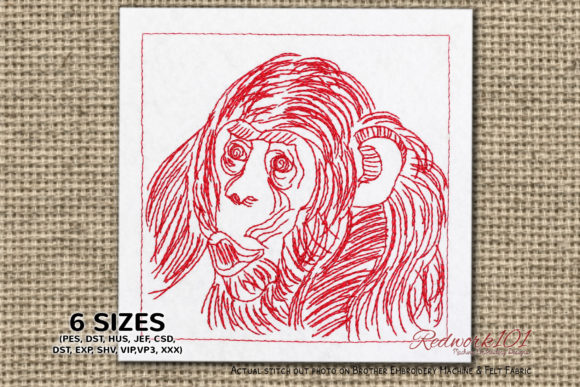
As an embroidery designer who’s tested hundreds of animal motifs for baby boutiques, wedding studios, and Etsy shops, Baby Chimpanzee stopped me mid-hoop. It’s not another generic bear or bunny — it’s a thoughtful redwork interpretation of a baby chimpanzee that balances curiosity and tenderness. The expression is gentle but alert, the posture relaxed yet full of life. It feels handmade, not mass-produced — especially in redwork, where simplicity becomes sophistication. This isn’t just “cute.” It’s sweet with personality, unusual without being alienating, and quietly elegant enough for heirloom pieces. Customers drawn to meaningful, story-rich gifts — not just decorative filler — will immediately connect.
Where Baby Chimpanzee Shines: Real-World Gift Applications
Because Baby Chimpanzee carries emotional warmth and visual distinction, it translates beautifully across multiple personalized gift categories:
- Baby embroidery: Perfect on organic cotton blankets, muslin swaddles, or knit onesies (when stabilized properly). Its expressive face invites naming, storytelling, and long-term attachment — ideal for newborn announcements or milestone keepsakes.
- Wedding gifts: Stitched onto linen pillow covers or hand towels for the couple who loves travel, conservation, or offbeat charm. Paired with a custom monogram or date, it becomes a conversation-starting heirloom.
- Nursery decor: Works exceptionally well on framed hoop art, canvas wall hangings, or quilt blocks. Its redwork style reads clearly at small scale and holds up under soft lighting — no glare, no visual fatigue.
- Everyday handmade products: Elevates embroidered towels, aprons, tote bags, and pillow covers with a touch of wild whimsy. Unlike busier animal designs, Baby Chimpanzee doesn’t overwhelm — it complements.
- Etsy listings & craft fair displays: Stands out in search results under “unique baby embroidery” or “wild animals embroidery.” Its distinctiveness helps small shop products avoid blending into algorithmic sameness.
Where to Use Baby Chimpanzee Thoughtfully
Not every surface or stitch counts as equal — and Baby Chimpanzee’s charm depends on smart application. Here’s where extra care pays off:
- Small lettering or fine details: Avoid pairing Baby Chimpanzee with tiny script text unless you’ve tested legibility at your target size. The design itself has clean lines, but added personalization needs breathing room.
- Textured or thick fabrics: On terry cloth towels or heavy linen, use cutaway stabilizer and reduce stitch density if possible — dense fills can flatten texture or cause puckering. Always test on scrap first.
- Stretchy or delicate fabrics: For baby clothes like knits or bamboo blends, opt for lightweight tear-away + topping, and confirm the file’s underlay and pull compensation settings are optimized.
- Curved surfaces (mugs, bottles, curved tote straps): Baby Chimpanzee isn’t ideal for direct embroidery here — its balanced proportions rely on flat, stable tension. Save it for flat panels instead.
- Dark fabric backgrounds: Redwork traditionally shines on light fabric. If stitching on charcoal or navy, verify thread color contrast — some reds fade visually. A printable mockup helps preview this before hooping.
- Frequently washed items: For blanket embroidery or kitchen towels, choose high-quality polyester thread and lock stitches at start/end. Confirm the file includes proper under-stitching for durability.
How Baby Chimpanzee Builds Trust and Emotional Value
In a crowded handmade market, customers don’t just buy embroidery — they buy intention, care, and resonance. Baby Chimpanzee delivers that instantly. Its uniqueness signals curation, not convenience. When stitched onto a custom tote or nursery pillow, it tells a quiet story: “This wasn’t picked from a thousand options — it was chosen *for you*.” That perception lifts perceived value, encourages premium pricing, and deepens buyer engagement. Photographed well (soft natural light, neutral background), Baby Chimpanzee creates scroll-stopping Etsy thumbnails and social media posts — especially when shown on real finished products, not just digital previews.
Practical Embroidery Notes Every Maker Should Follow
Before stitching Baby Chimpanzee on your next customer order, run through these essentials:
- Test on scrap fabric — same type, same color, same layering (e.g., towel + stabilizer) as your final product.
- Check thread color contrast on both light and dark substrates. Redwork relies on tone, not saturation alone.
- Confirm hoop size compatibility. Does Baby Chimpanzee fit comfortably within your most-used hoop? If it’s tight, consider repositioning or adjusting placement.
- Review stitch density. Overly dense fills may distort delicate fabrics; too sparse may lack definition. Adjust based on fabric weight.
- Use appropriate stabilizer. Cutaway for stretchy or unstable fabrics; tear-away for stable wovens; topping for napped or textured surfaces.
- Compare light/dark fabric mockups using your design software — subtle shifts in tone affect mood and readability.
- Inspect small details post-stitch. Eyes, ears, and facial contours should read cleanly — no thread nests or skipped stitches.
- Verify commercial licensing before selling finished products. As a digital embroidery file, Baby Chimpanzee must be cleared for resale in your region and platform (e.g., Etsy’s policies).
Final Thought: A Design That Grows With Your Shop
Baby Chimpanzee isn’t just another Wild Animals embroidery — it’s a versatile, emotionally intelligent asset for makers who value meaning over mass appeal. Whether you’re building a boutique baby line, launching wedding keepsakes, or expanding your Etsy embroidery collection, this design invites connection, supports storytelling, and stands apart with quiet confidence. It reminds us that the best personalized gifts aren’t just customized — they’re chosen. And Baby Chimpanzee? It’s always worth choosing.